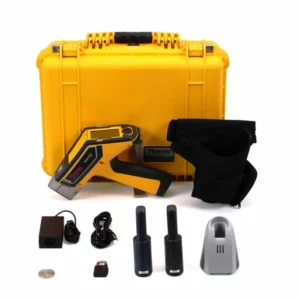
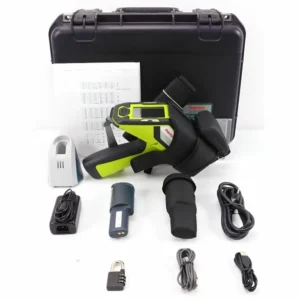
Thermo Scientific Niton DXL Desktop Analyzer Precious Metal Analyzer
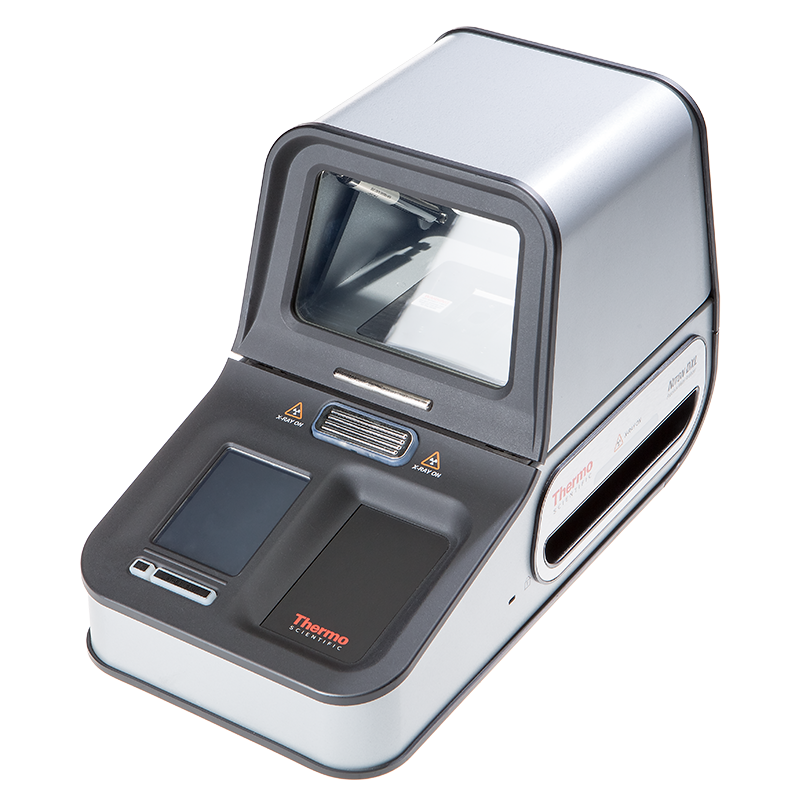
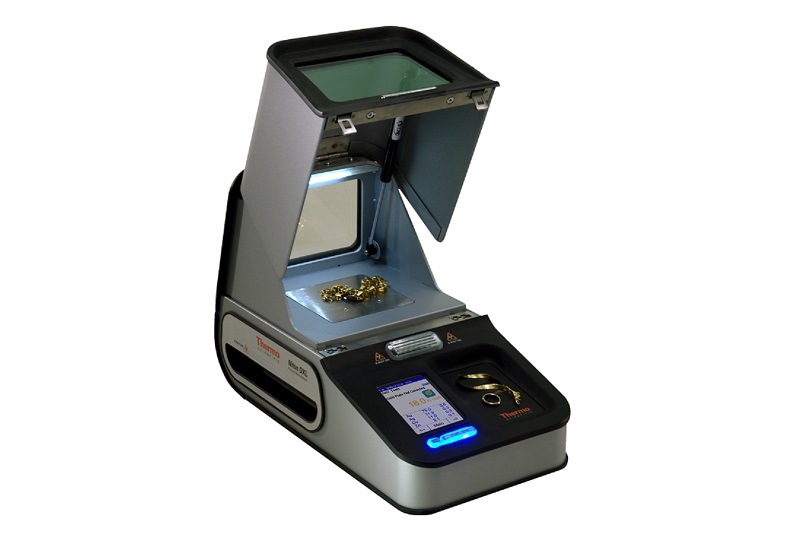
The Thermo Scientific Niton DXL Desktop Analyzer is designed for a laboratory or benchtop environment, offering higher precision and sample throughput than handheld XRF analyzers, while still being compact. It’s particularly well-suited for businesses that require detailed elemental analysis of precious metals without the need for portability.
Here are the key specifications for the Niton DXL Desktop Analyzer when configured as a Precious Metal Analyzer:
General Specifications:
Type: Desktop X-Ray Fluorescence (XRF) Analyzer
Primary Application: Precious Metal Assay (Gold, Silver, Platinum, Palladium, etc.), Alloy Identification, and Quality Control.
Sample Type: Solids (jewelry, coins, bullion), Powders (can be analyzed in sample cups or pressed pellets).
Analysis Time: Typically 10-60 seconds per sample for precise quantitative analysis, depending on the element and desired precision. This is generally faster for comparable precision than handhelds due to a more stable environment and higher power options.
User Interface: Intuitive touchscreen display, user-friendly software with dedicated precious metal modules.
Data Storage: Internal memory, expandable via USB drive or network connection.
Connectivity: Ethernet (for network integration and data management), USB.
Power: Standard AC power outlet.
Operating Temperature: 15°C to 30°C (59°F to 86°F) – designed for a controlled environment.
Operating Humidity: 10% to 80% non-condensing.
Dimensions (Approximate): Designed to fit on a workbench. Typical dimensions might be around: 20” x 15” x 10” (50 cm x 38 cm x 25 cm) – (Height x Width x Depth).
Weight: Heavier than handhelds, typically around 40-50 lbs (18-23 kg).
Construction: Robust metal housing, designed for stability and safety in a fixed location.
X-Ray System Specifications:
X-ray Tube: Higher power and potentially more advanced Rhodium (Rh) anode tube than typical handhelds, optimized for assaying high-Z elements like precious metals.
High Voltage: Variable, often up to 50 kV.
Current: Variable, capable of higher currents than handhelds, contributing to faster analysis and lower detection limits.
Filters: Multiple integrated X-ray beam filters for optimizing excitation of specific elements and minimizing background noise, tailored for precious metal analysis.
Detector:Silicon Drift Detector (SDD). This is crucial for achieving high accuracy and precision in precious metal analysis, especially for distinguishing between closely spaced peaks and low-level impurities.
Energy Resolution: Excellent, typically < 135 eV at 5.9 keV Mn Kα. This is a significant advantage for separating spectral lines.
Sample Chamber: Enclosed sample chamber with safety interlocks to ensure operator safety. This allows for controlled atmosphere (if needed) and better spectral quality.
Collimator/Beam Spot Size: Offers precise control over the analysis spot size, allowing for the examination of small components within jewelry.
Analytical Capabilities (Precious Metal Specific):
Elements Analyzed: Highly optimized for:
Gold (Au)
Silver (Ag)
Platinum (Pt)
Palladium (Pd)
Rhodium (Rh)
Ruthenium (Ru)
Iridium (Ir)
Base Metals: Copper (Cu), Zinc (Zn), Nickel (Ni), Iron (Fe), Tin (Sn), Lead (Pb), etc., which are common in alloys and as plating.
Quantitative Assay: Provides highly accurate percentage composition for multiple elements simultaneously.
Precious Metal Grade: Identifies platinum group metal grades.
Detection of Counterfeits/Plating: Sophisticated software algorithms are designed to detect gold plating over base metals (especially Tungsten and Iridium) and other common adulterants in bullion and jewelry.
Bullion Verification: High precision for assaying gold bars, coins, and other bullion forms.
Jewelry Analysis: Detailed analysis of rings, necklaces, earrings, and other jewelry items.
Calibrations: Utilizes advanced Fundamental Parameters (FP) and empirical calibration models optimized specifically for precious metals and their common alloys. Can also support user-defined calibrations.
Key Advantages over Handhelds (like Niton XL2 or Vanta GX):
Higher Precision and Accuracy: The enclosed sample chamber, higher X-ray power, and more stable environment generally lead to better detection limits and accuracy.
Better for Complex Alloys: Can handle more intricate alloy compositions and trace elements with greater confidence.
Improved Reporting: Often offers more detailed and customizable reports suitable for laboratory use or audits.
Higher Throughput (for lab environments): While each scan might be similar in time, the setup and reporting can be more streamlined for batch analysis.
Enhanced Safety: Enclosed sample chamber with interlocks provides a higher level of radiation safety for a fixed workstation.
In Summary:
The Niton DXL Desktop Analyzer configured for precious metals is a more powerful and precise analytical instrument than handheld XRFs. It’s ideal for businesses that require rigorous, repeatable, and documented analysis of precious metals in a controlled lab setting, such as refineries, assay offices, high-end jewelers, and mints.