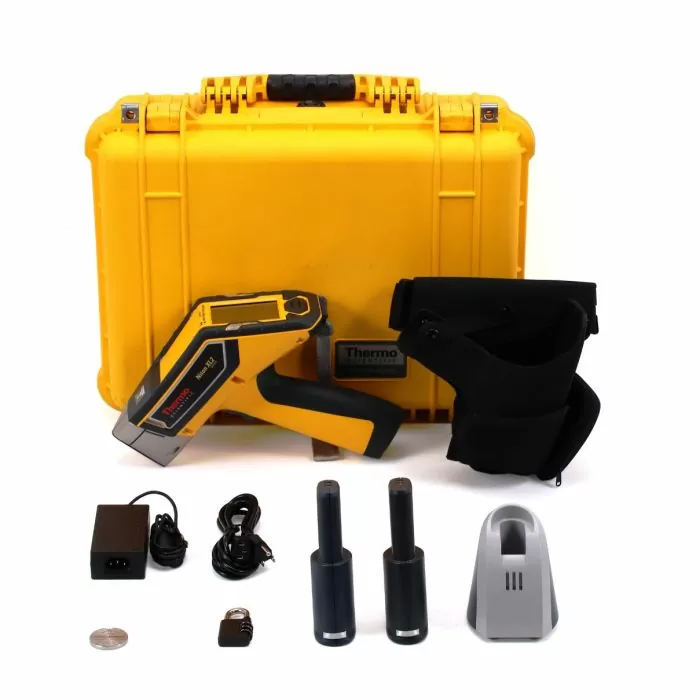
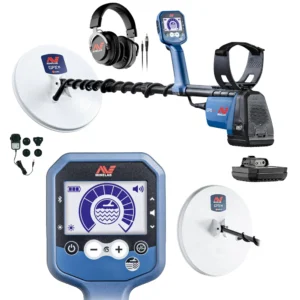
The Thermo Scientific Niton XL2 980 GOLDD XRF Analyzer is a versatile and robust handheld X-ray fluorescence (XRF) spectrometer. It’s designed for rapid, on-site elemental analysis in a wide range of applications.
Here are the key specifications for the Thermo Scientific Niton XL2 980 GOLDD XRF Analyzer:
Filter: Multiple integrated X-ray beam filters for optimizing excitation of specific elements and minimizing background noise. The “GOLDD” technology often implies specific filter configurations for improved performance.
Detector:Silicon Drift Detector (SDD) – This is a key feature of the XL2 980 GOLDD, offering excellent energy resolution and high count rates for faster and more accurate analysis.
Energy Resolution: Typically < 145 eV at 5.9 keV Mn Kα.
Collimator: Various apertures to control the size of the analysis spot.
Analytical Capabilities:
Elements Analyzed: Capable of analyzing a wide range of elements from Magnesium (Mg) to Uranium (U), depending on the specific application and calibration.
Detection Limits: Very low ppm (parts per million) detection limits for many elements, especially with the GOLDD technology.
Accuracy & Precision: High accuracy and precision achievable for quantitative analysis.
Applications/Modes:
Alloy Mode: Rapid identification and quantification of metals and alloys (ferrous, non-ferrous, precious metals).
Mining & Exploration: On-site identification of valuable ore samples.
Environmental: Screening for heavy metals in soil, water, and other environmental samples.
RoHS/WEEE: Screening for restricted hazardous substances in electronics.
Consumer Goods: Verification of material composition.
Field/Portable Metallurgical Analysis: On-site confirmation of material grades.
Jewelry/Precious Metals: Rapid assaying of gold, silver, platinum, etc.
Calibration:
Empirical Calibration: Based on known standards.
Fundamental Parameters: Theoretical calculations based on element properties.
User-Defined Calibrations: Ability to create custom calibrations for specific applications.
Key Features of the “GOLDD” Technology:
The “GOLDD” (Geometrically Optimized Large Area Drift Detector) technology is a significant differentiator for this model. It typically refers to an optimized detector geometry and potentially a larger detector area, which, combined with an SDD, leads to:
Faster Analysis Times: Improved signal-to-noise ratio allows for quicker readings.
Lower Detection Limits: Enhanced sensitivity for detecting trace elements.